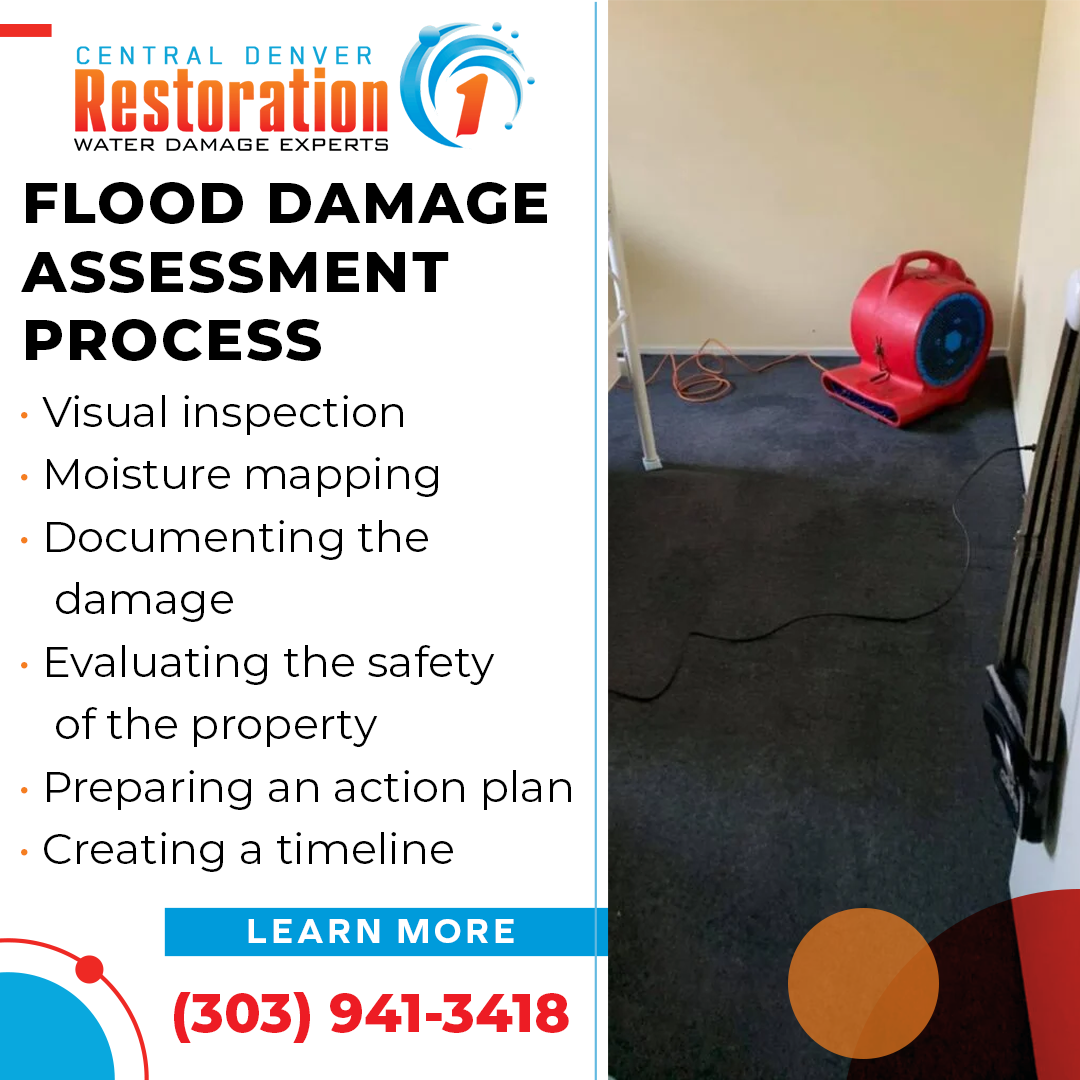
Flood Damage Assessment Process
Homeowners in West Denver who have experienced flood damage can rely on Restoration 1 of Central Denver's expert flood restoration services. They understand that the aftermath of a flood can be overwhelming, causing structural damage and personal property loss. That's why their professional flood restoration team assesses the extent of the damage and guides homeowners through the restoration process. In this article, Restoration 1 of Central Denver explains the assessment process to help homeowners understand what to expect.
.png)
1. Visual Inspection
The first step in assessing flood damage is visually inspecting the property. A professional restoration technician will conduct a thorough visual inspection of the property to determine the extent of the damage. This inspection will include examining the walls, ceilings, floors, and other areas of the property that may have been affected by the flood. The technician will take notes and photographs of the damage to document the property's condition.
2. Moisture Mapping
After the visual inspection, the technician will use moisture mapping tools to assess the moisture level in the affected areas. Moisture mapping is a process that uses specialized tools to detect and measure moisture levels in different areas of the property. The technician will use these tools to identify the moisture source and determine the damage's extent.
3. Documenting the Damage
During the assessment process, the technician will document the damage in detail. This documentation is crucial for insurance claims and can help the technician create an action plan to restore the property. The documentation will include the following:
- A detailed list of damaged items.
- The extent of the damage.
- The estimated cost of repairs.
4. Evaluating the Safety of the Property
After the assessment is complete, the technician will evaluate the safety of the property. If the property is unsafe, the technician may advise you to vacate the property until the damage has been restored. Safety concerns can include structural damage, electrical hazards, and exposure to hazardous materials.
5. Preparing an Action Plan
Once the assessment is complete, the technician will prepare an action plan for restoring the property. The action plan will include a detailed list of repairs and the estimated cost of those repairs. The technician will discuss the action plan with you and explain the steps needed to restore the property.
6. Creating a Timeline
After the action plan is complete, the technician will create a timeline for restoring the property. The timeline will include the estimated time to complete each restoration process step. The timeline will help you understand the restoration process and know what to expect during the restoration process.
Restoration 1 of Central Denver emphasizes the importance of swift action in flood restoration. With specialized tools and expertise, their technicians accurately assess the extent of the damage, create a plan, and fully restore the property. Delaying the assessment and restoration process can result in greater damage and health risks, so contacting a professional flood restoration company like Restoration 1 of Central Denver in West Denver is critical for effective and efficient restoration.
.png)
Restoration 1 of Central Denver: Your Trusted Flood Restoration Service
24/7 Emergency Service
Certified & Highly Trained Restoration Specialists (IICRC)
Effortless Insurance Claims
Swift Damage Assessment & Pretesting
Premium Service Standards & 5-Star Quality Service
Get in touch with the expert team of Restoration 1 of Central Denver now!
Email: john.rust@restoration1.com
Phone: (303) 941-3418
Restoration 1 of Central Denver
7255 W EVANS AVE
DENVER, CO 80227-2617